Check the roof age and flood map before you offer
The two insurance problems that surface late in an Upstate purchase, and the two questions in week one that find them early.

Quick answers
- When should you ask how old the roof is on a house you want to buy?
- Before the offer is written, not after the inspection. The listing agent can usually answer in a text message, and the three facts an insurance agent needs are the year the roof was installed, whether a permit or an invoice exists for it, and what the covering is. Asked after the inspection, the answer arrives with the due diligence clock already running and no room left to act on it.
- When should a buyer order the homeowners quote after going under contract?
- In the same week the contract is signed, not the week of closing. A quote ordered early is still information: if carriers will only write the house with roof claims settled at depreciated value, there is time to price a roof, ask the seller to address it, or walk away. The same answer in closing week is a fact to accept, with movers already booked.
- Does homeowners insurance cover flood damage?
- No. FEMA states that most homeowners insurance does not cover flood damage and that flood insurance is a separate policy, and South Carolina's insurance regulator lists flood and surface water run-off among what may not be covered. A house inside a Special Flood Hazard Area with a mortgage from a government-backed lender is required to carry flood insurance, and the loan cannot close without a policy in force.
- How do you find out if a house is in a flood zone?
- Search the exact address on FEMA's Flood Map Service Center, which is free, takes an address, a place name, or a latitude and longitude, and returns the effective flood map for that point. Read it for where the structure stands rather than for the whole parcel, because a lot can touch a mapped high-risk zone along a creek at the back while the house itself sits well above it.
- How long does it take to get a house removed from a flood zone?
- FEMA normally issues a determination on a Letter of Map Amendment within 60 days of receiving a complete application, and gives notice within 30 days on whether the application is complete. Qualifying requires the lowest ground touching the house to sit at or above the base flood elevation, proven with elevation data certified by a licensed land surveyor or a registered professional engineer. FEMA charges no review fee. The surveyor does.
- If a house is not in a flood zone, can it still flood?
- Yes. FEMA says floods can happen anywhere, and FloodSmart, the National Flood Insurance Program's own site, reports that a large share of flood claims come from outside high-risk flood areas. During Hurricane Helene in September 2024 the National Weather Service office in Greenville-Spartanburg recorded 18.12 inches of rain at its Slater-Marietta gauge. Being outside a mapped zone only means the lender will not require a flood policy.
Two insurance problems cause most of the late scrambles we see in an Upstate closing, and both are answerable in the first week. Ask the listing agent how old the roof is before you write the offer. Then look the exact address up yourself on FEMA's Flood Map Service Center, because a standard homeowners policy does not cover flood and a separate flood policy takes time to arrange. Both are awful to answer in the last week before closing.
When should you ask how old the roof is on a house you want to buy?
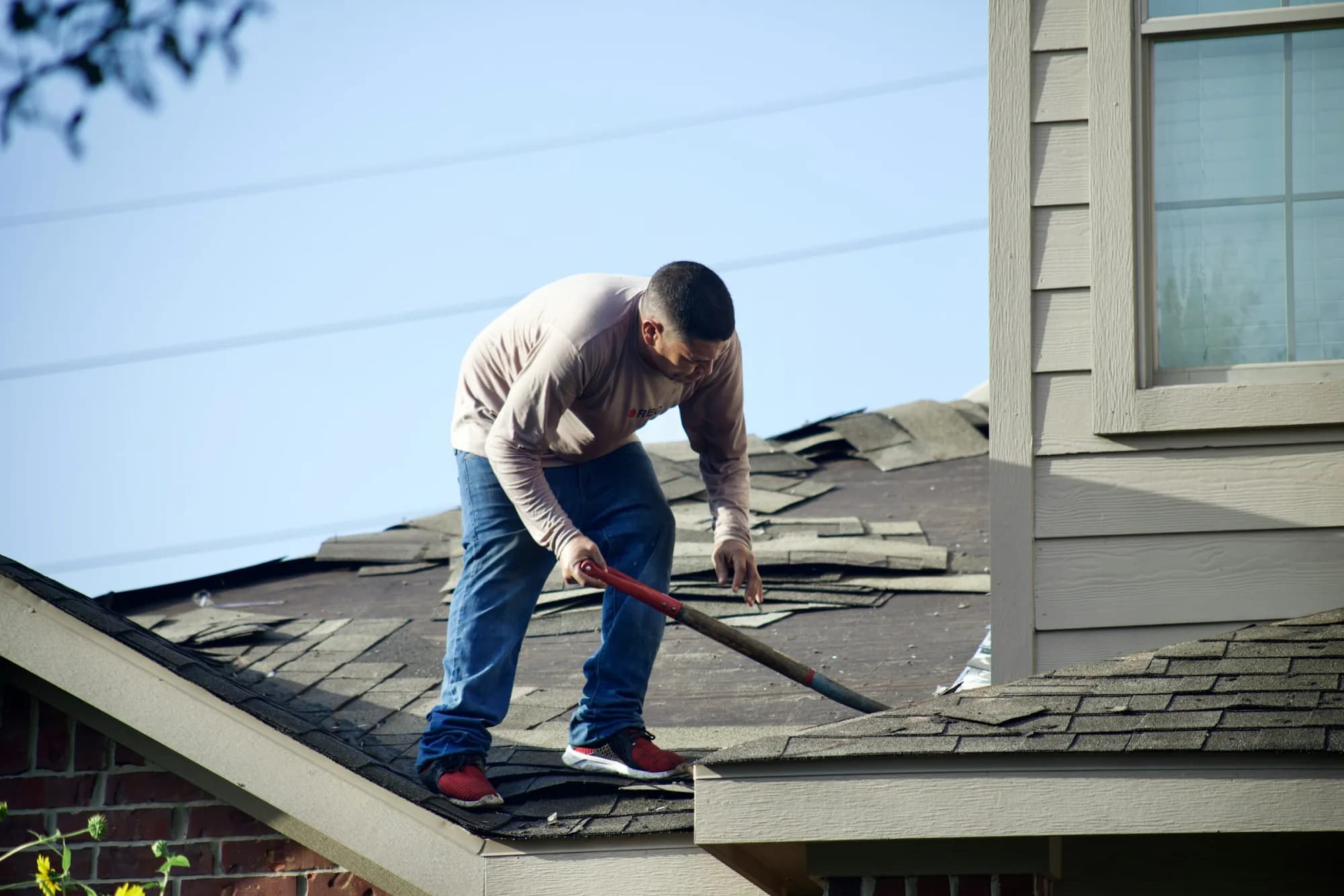
Ask the listing agent how old the roof is before you write an offer on an Upstate house. The roof's age changes what a carrier is willing to write, and a listing agent can usually answer in a text message. Asking after the inspection is the mistake: the due diligence clock is already running and the answer arrives with no room left to act on it.
What you are after is not whether the roof leaks. The inspector will tell you that. You want the year it was installed, whether there is a permit or an invoice for it, and what the covering is. Those three facts let an insurance agent tell you within a day whether the house will be offered a normal policy, a policy that settles roof claims at depreciated value, or nothing at all.
The South Carolina Department of Insurance's consumer guide lists "condition and upkeep of property" and "age and value of your house" among the things companies weigh when deciding what to underwrite. The same guide says flatly that "replacement cost coverage is not available on all policies" and that you have to check with your agent. That sentence is what catches buyers late.
When should a buyer order the homeowners quote after going under contract?
Order the homeowners quote in the same week you go under contract on an Upstate house, not the week you close. That one change removes most of the late scrambling.
A quote ordered early is information you can still use. If the answer is that carriers will only write the house with roof claims settled at depreciated value, you have time to price a roof, ask the seller to address it, or walk away. A quote ordered in closing week is not information. It is a fact you have to accept, with movers already booked.
The South Carolina Department of Insurance describes actual cash value as payment "limited to the depreciated value of each item at the time it is damaged," and describes modified coverage forms, written for older houses, where losses are paid that way instead of at replacement cost. On a 1970s roof that difference is the whole conversation, and it belongs in week one.
Does homeowners insurance cover flood damage?
A South Carolina homeowners policy does not cover flood damage. FEMA states plainly that "most homeowners insurance does not cover flood damage" and that "flood insurance is a separate policy." South Carolina's insurance regulator says the same in its consumer guide, listing "flood or surface water run-off" among what may not be covered.
The requirement comes from the lender, not the seller. FEMA says homes in high-risk flood areas with mortgages from government-backed lenders are required to carry flood insurance. High risk means the structure sits inside a Special Flood Hazard Area on the effective FEMA map. If it does, the loan will not close without a flood policy in force, and nobody in the transaction can waive that.
How do you find out if a house is in a flood zone?
FEMA's Flood Map Service Center shows whether a specific Upstate address sits in a mapped flood zone, and it is free. It takes an address, a place name, or a latitude and longitude, and returns the effective flood map for that point. It is FEMA's own map rather than somebody's resale of it.
Read the map for the structure, not for the whole parcel. A lot can touch a mapped high-risk zone along a creek at the back while the house itself sits well above it. The map is drawn at a scale that cannot always see that difference, and the lender follows the map.
How long does it take to get a house removed from a flood zone?
FEMA's Letter of Map Amendment is how a house in the South Carolina Upstate gets out of a flood zone it was mapped into by mistake, when it stands on natural high ground. FEMA's own description covers cases where small areas are "inadvertently shown within a Special Flood Hazard Area" even though the property is on natural ground at or above the base flood elevation.
To qualify, the lowest adjacent grade, meaning the lowest ground touching the house, has to be at or above the base flood elevation, and you have to prove it with elevation data certified by a licensed land surveyor or a registered professional engineer. FEMA charges no fee to review the request. The surveyor does.
FEMA says it normally issues a determination within 60 days of receiving a complete application, and notifies you within 30 days whether the application is complete. Most Upstate contracts do not have 60 days in them. If the map looks wrong on a house you want, start the amendment the day you go under contract and buy the flood policy anyway while it is pending.
If a house is not in a flood zone, can it still flood?
Being outside a mapped high-risk flood zone in the Upstate means the lender will not require flood insurance. It does not mean water cannot reach the house. FEMA says flatly that "floods can happen anywhere," and FloodSmart, the National Flood Insurance Program's own site, reports that a large share of its flood claims come from outside high-risk flood areas.
The Upstate saw that in 2024. In its post tropical cyclone report for Hurricane Helene, September 25 to 27, 2024, the National Weather Service office in Greenville-Spartanburg recorded 18.12 inches of rain at its Slater-Marietta gauge in the northern Upstate and gusts of 56 knots at Greenville Downtown Airport, and described widespread wind damage across the region. Much of the water that got into Upstate houses that week got in on lots nowhere near a mapped flood zone, where a creek or a storm drain could not keep up.
The FEMA map tells you what your lender will require. It tells you very little about whether your particular Upstate lot drains. For that, walk the property after a hard rain, look at where the downspouts discharge, and ask the inspector about the grading and the crawl space.
What we do about the roof age and the flood map
On every Upstate purchase we ask for the roof's age with the first showing request, and we ask the buyer to call an insurance agent the day the contract is signed. Both steps get skipped constantly, and both separate a closing that moves from one that stalls.
We are not a lender, a lawyer, an inspector or an insurance agent. The people who are, including the insurance broker and the inspectors we send buyers to, are on our vendors page.